Benefits worth staying for.
Most plans burn the premium. We name it. Every employee watches a balance with their name on it grow, sees the posted price before care, and pays with one card. Nobody quits a benefit that keeps getting better.
Same self-funded structure. Same stop-loss. Everything underneath changes.
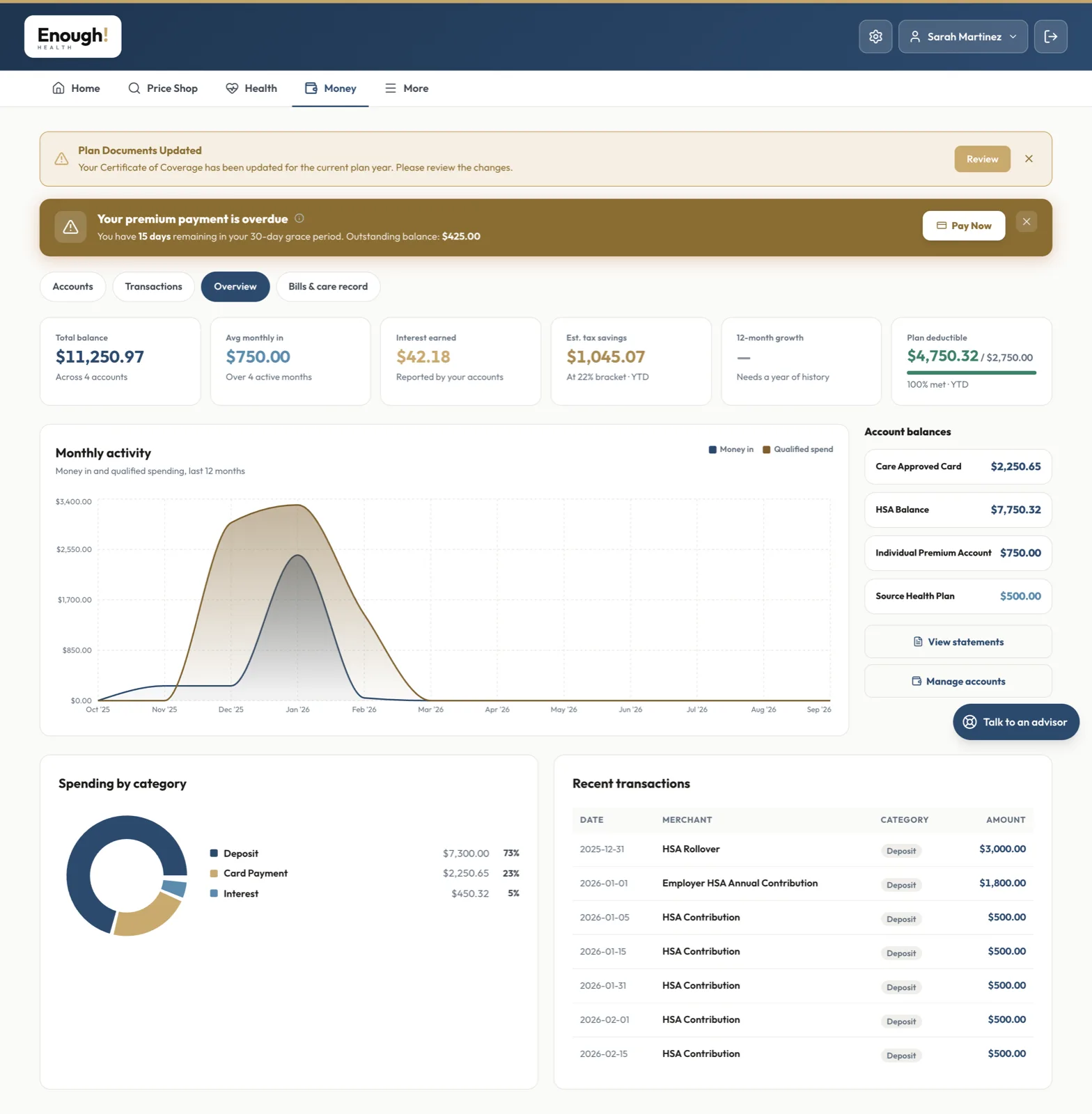
Screens are the real Member Portal and app, shown with sample data.
The annual renewal
Every September, the same drill. Negotiate. Cut. Apologize. Repeat.
$26,9931
the average family premium in 2025, employer and employee combined
+26%1
increase in that premium over the last five years
34¢2
of every healthcare dollar spent on administration, not care
1. KFF Employer Health Benefits Survey, 2025. 2. Himmelstein et al., Annals of Internal Medicine, 2020, share of U.S. health spending on administration.
Your employees’ premiums vanish into a carrier’s pool. Nothing builds. Nothing stays. There is a better architecture, and it starts with what the money does.
Sarah's skin check, step by step.
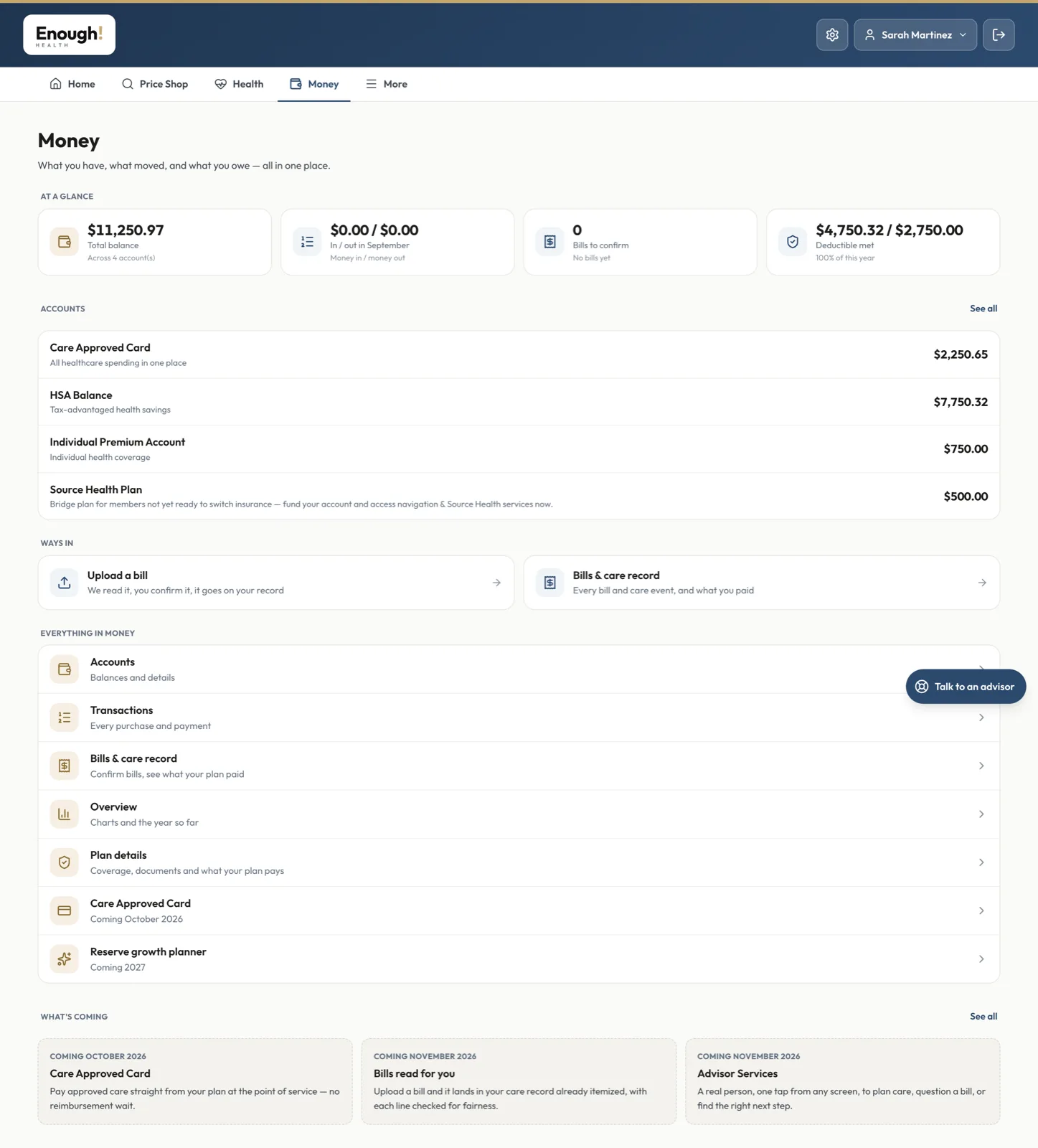
This is what a health plan feels like when the money has your name on it. No claims department. No paperwork. A 30-minute doctor visit that takes 30 minutes. Every screen is the real app, on sample data.
Hypothetical example for illustrative purposes.
SEE
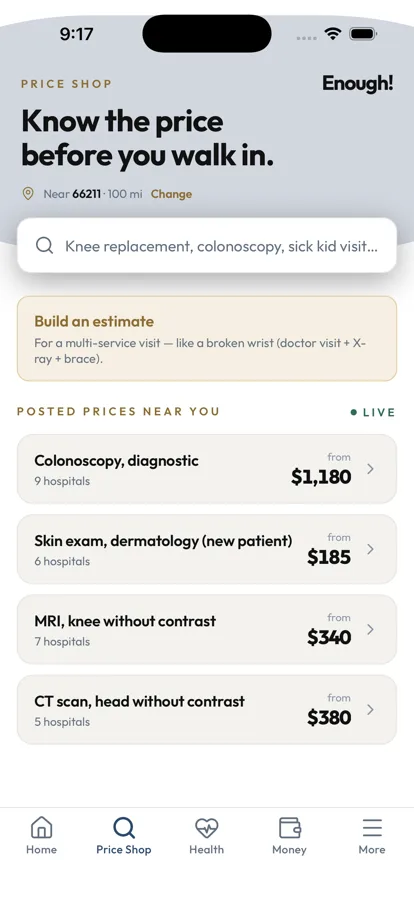
Sarah notices a mole that changed shape
She wants a dermatologist to look at it. So she picks one. Any one. No network, no referral, no permission. Dr. Patel, Tuesday, 10am.
SEE
Seven words at check-in
The front desk asks about insurance. Sarah says:
No insurance card. No pre-authorization. No hold music.
SEE
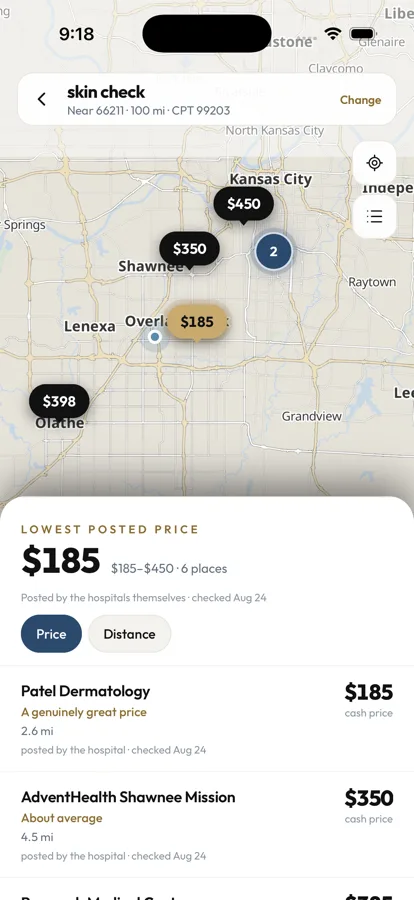
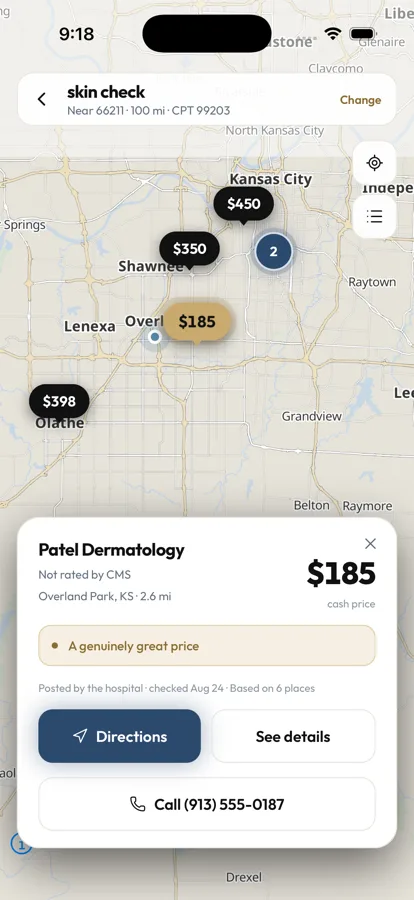
She sees the price before she agrees
Hospitals are required by federal law to publish their prices. Self-pay patients have a federal right to know the cost upfront. Sarah's plan is built on both.
Traditional insurance billing
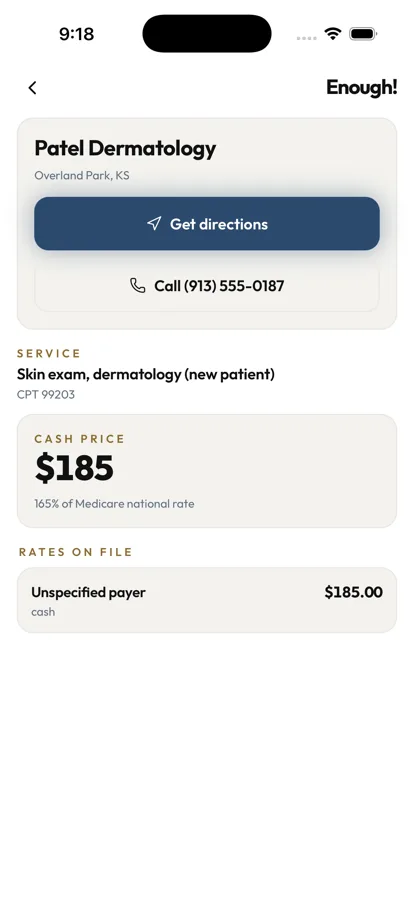
Sarah's price
CARE
Dr. Patel does the skin check
Full-body skin exam, dermatoscope, verdict: benign. Follow up in six months.
PAY
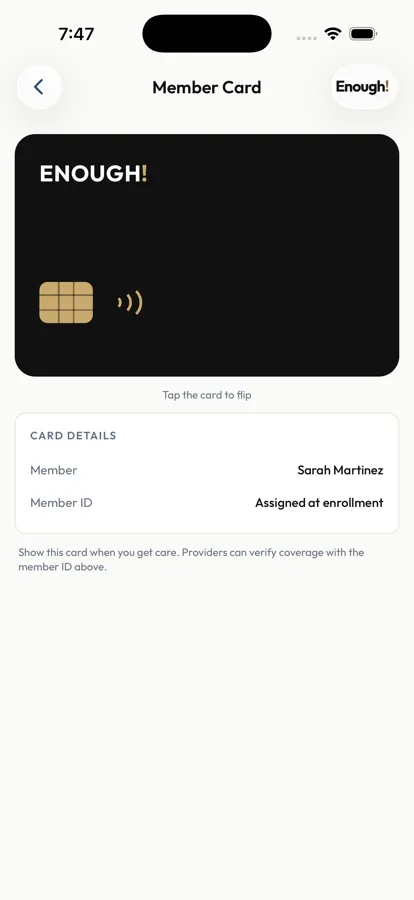
One tap of the card
At checkout, Sarah taps her Care Approved Card. $185. Done. Dr. Patel is typically paid the same day.
PAY
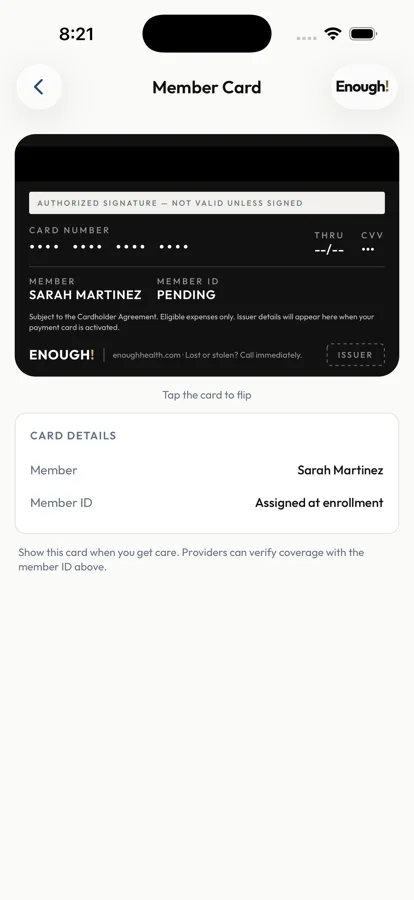
The card knew which pocket pays
Sarah didn't choose an account. The card routed it: her own health dollars cover everyday care, and every dollar of it counts toward her yearly cap.
KEEP
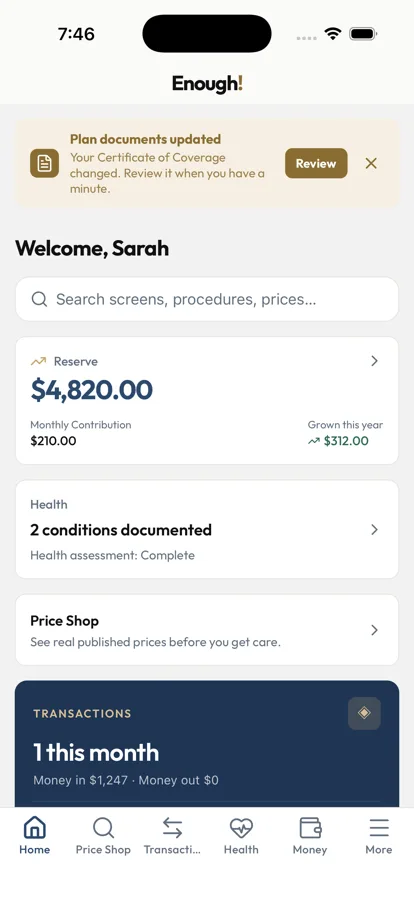
Her Reserve didn't move. That's the point.
The balance with Sarah's name on it paid nothing today and lost nothing today. It rolls forward, grows every year she stays, and keeps paying for her care even if she someday leaves. Most plans burn the premium. Hers is building a wall with her name on it.
FUND
And if it had been serious?
Four layers stand behind her, in order:
Her own health dollars
Everyday care, up to one clear yearly cap. That cap is the most she can ever pay.
Her Reserve
The named balance takes over from there.
Plan coverage
The plan's pooled layer carries the big costs.
Out-of-pocket maximum
Past this, the plan pays covered care in full. No more bills.
A benign mole costs $185. A serious one hits the same wall every time: her cap, then never her wallet again.
Sarah notices a mole that changed shape
She wants a dermatologist to look at it. So she picks one. Any one. No network, no referral, no permission. Dr. Patel, Tuesday, 10am.
Traditional Insurance
Enough! Health
Simple enough that HR never gets a phone call. Named enough that nobody wants to leave it behind.
For HR
What HR stops doing.
Simple enough that HR never gets a phone call. The left column is the job today. The right column is what happens instead.
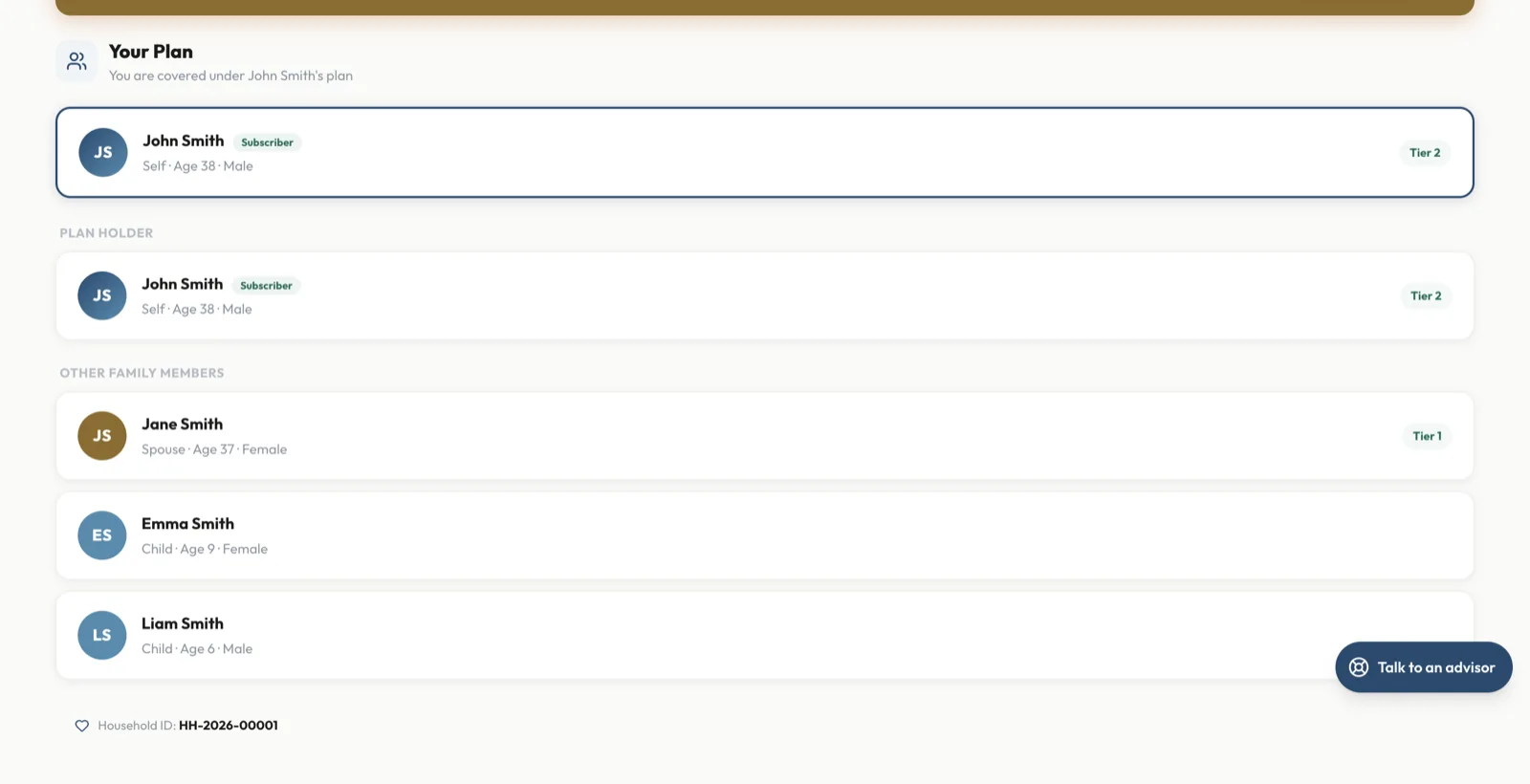
The family is in the portal, with tiers and ages, so nobody has to explain “dependent” to anyone.
The Care Approved Card
The card is the plan.
Most of what a claims department does today happens at the point of sale, from the plan’s own coverage rules. Every transaction creates a verified record.
- Any provider
- Any provider accepting its own published price is in-network by definition. There is no network to fall out of.
- Paid in 24 to 48 hours
- The provider's published rate, paid at card speed. No claim forms. No prior authorization.
- The right pocket pays
- Health dollars, Reserve, then the plan's claims fund, automatically. One swipe: adjudicated, paid, proven.
$0 spent on claims clearinghouses and prior-auth machinery. Card issuance begins this October.
The proof
Bring us twelve months of claims. We’ll reprice every line.
A benchmark is a claim. A measurement is a fact. We would rather show you your own plan against posted prices than promise you a percentage.
- 1
Send the claims file
Twelve months of claims from your current administrator. We sign an NDA first.
- 2
Get the repricing analysis
We reprice every line at the posted price for the same service in your market. You see it line by line.
- 3
Decide with your own numbers
No benchmark, no projection. A measurement of your plan against published prices. The first meeting and the analysis are free.
What your people get
Does not feel like insurance. Feels like an app that works.
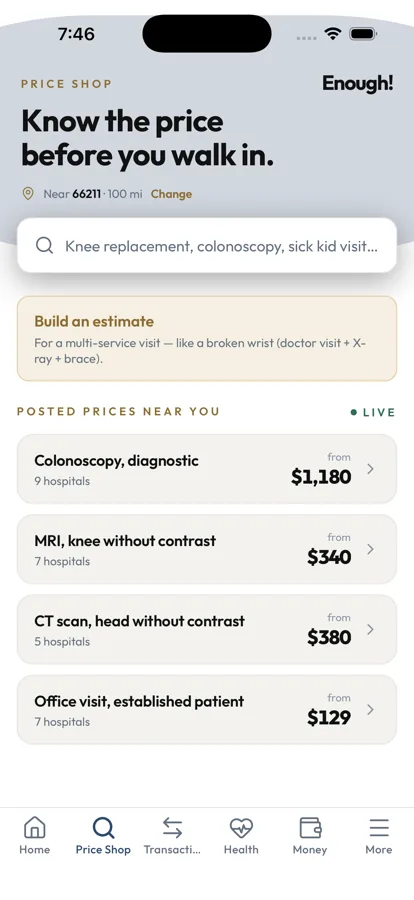
Posted prices on a map, a balance with their name on it, one card, and a person to call. Cards, app and named balances are live on day one.
Plan options
One architecture. Three ways in, in order.
- Available now
TPA services
Third-party administration for self-funded plans of any size. Your stop-loss, your PBM, our administration. One flat, fully disclosed PEPM. No spread pricing.
Details → - Coming next
Captive group plan
Pooled risk for employers of 100 to 1,000 on the same architecture.
Details → - Coming next
ICHRA
Individual coverage HRA for employers of 25 to 250 who want defined contribution with the same app and card.
Details →
Enough! Health is not a retirement account, investment vehicle, or brokerage product. The Reserve is a health plan feature, not a securities product.
Questions plan sponsors ask
Before the first call.
- Do we change our stop-loss or PBM?
- No. Your stop-loss and your PBM stay yours. We administer the plan underneath them.
- What does the Reserve cost us?
- You set a monthly contribution per employee. It funds a balance in the employee's name that pays for care and rolls forward. It is plan money, not compensation, and it is not an investment product.
- What happens to an employee's Reserve if they leave?
- It stays usable for care under the plan's spend-down rules. It never disappears into a pool.
- How long does implementation take?
- Assess, contract, migrate, go live. Most employers are nine to twelve months out from a first meeting to a January 1 effective date, and cards, app and named balances are live on day one.
- Who talks to our employees?
- A Member Advisor, one tap from any screen in the app. Your HR team is not the help desk.
- Which states?
- TPA services are offered to self-funded plans nationally under ERISA. Tell us your state on the form and we will confirm licensing for your group.
Tell us about your group.
Employer or broker, headcount, and state. We reply within one business day with whether we can serve your group and what the repricing analysis needs.